


Wingcube Folding Tent Box
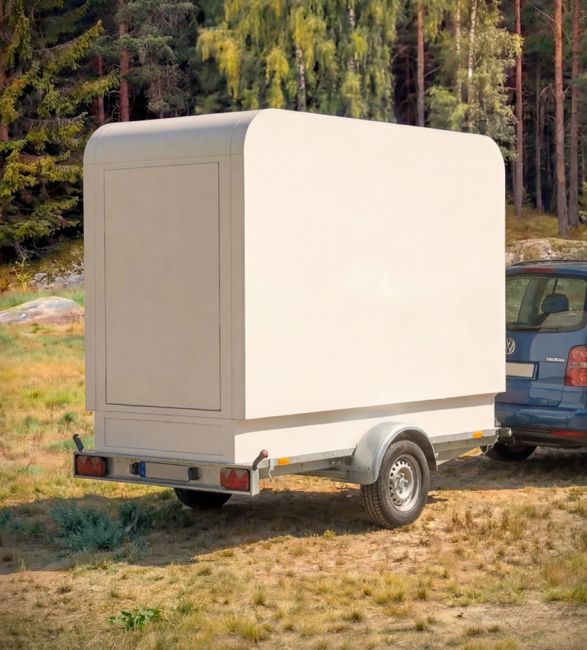
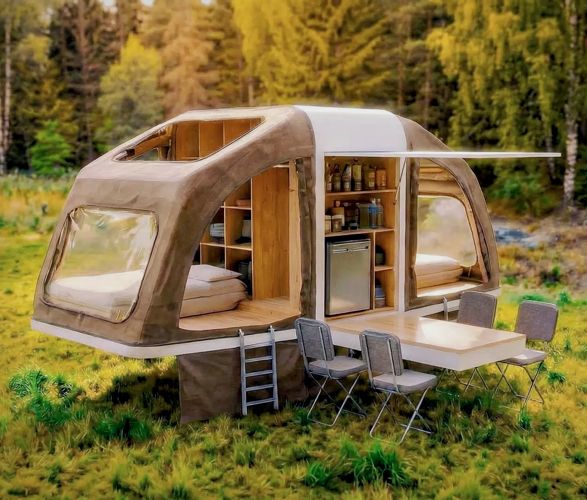
Wingcube Folding Tent Box is a bold new concept that reimagines what a compact camper can be. Designed as a tall, narrow cube that rides on top of a separate trailer, it expands at camp into a mushroom shaped platform tent with two raised bedrooms and a central outdoor living zone. The idea is simple but clever: tow a compact box that is easy to maneuver, then unfold it in minutes into a space that feels far larger than its footprint.
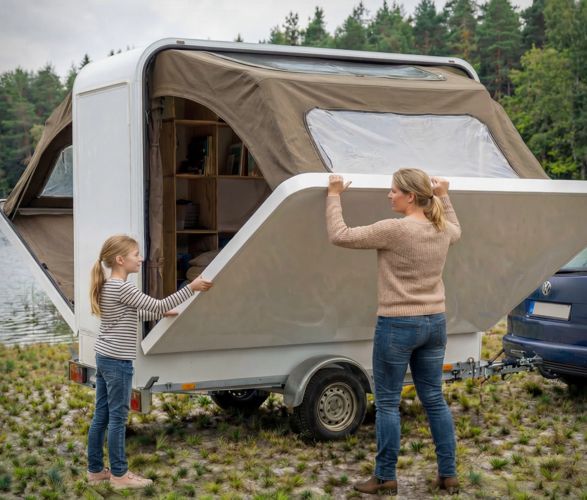
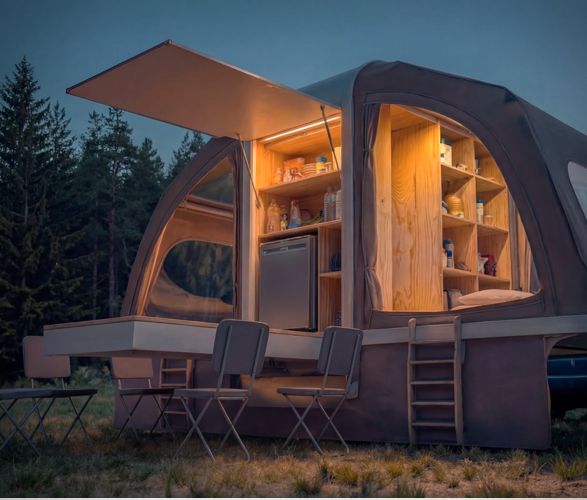
Created by inventor Paul Schultz and first presented at the 2026 edition of CMT, the Wingcube is still in development but already stands out as one of the more original camping concepts in recent years. Two fold down sidewalls automatically deploy the integrated tent structure, creating elevated sleeping areas designed to hold full double mattresses. The center section is planned as a flexible utility zone that can function as kitchen storage, pantry space or general gear organization, with a slide out table extending for outdoor dining.
The design draws comparisons to the classic Dutch expandable concept De Markies, a mobile living experiment from the 1980s that used similar fold out fabric spaces. Wingcube modernizes the idea with cleaner geometry and a stronger focus on lightweight trailer friendly travel. Current targets suggest a folded size around 2.5 by 2.1 by 1.2 meters, a weight of roughly 500 kg for the pod, and interior tent height approaching 1.9 meters.
While the project has yet to move beyond digital renders, plans call for a working prototype by the end of 2026 and potential production by late 2027, with a target price near twenty thousand euros. If it reaches market, the Wingcube could offer a genuinely fresh alternative to traditional tent trailers by combining compact towing with elevated, panoramic sleeping spaces that feel closer to glamping than camping.
Created by inventor Paul Schultz and first presented at the 2026 edition of CMT, the Wingcube is still in development but already stands out as one of the more original camping concepts in recent years. Two fold down sidewalls automatically deploy the integrated tent structure, creating elevated sleeping areas designed to hold full double mattresses. The center section is planned as a flexible utility zone that can function as kitchen storage, pantry space or general gear organization, with a slide out table extending for outdoor dining.
The design draws comparisons to the classic Dutch expandable concept De Markies, a mobile living experiment from the 1980s that used similar fold out fabric spaces. Wingcube modernizes the idea with cleaner geometry and a stronger focus on lightweight trailer friendly travel. Current targets suggest a folded size around 2.5 by 2.1 by 1.2 meters, a weight of roughly 500 kg for the pod, and interior tent height approaching 1.9 meters.
While the project has yet to move beyond digital renders, plans call for a working prototype by the end of 2026 and potential production by late 2027, with a target price near twenty thousand euros. If it reaches market, the Wingcube could offer a genuinely fresh alternative to traditional tent trailers by combining compact towing with elevated, panoramic sleeping spaces that feel closer to glamping than camping.