

House on the Lake by Obranegra Arquitectos
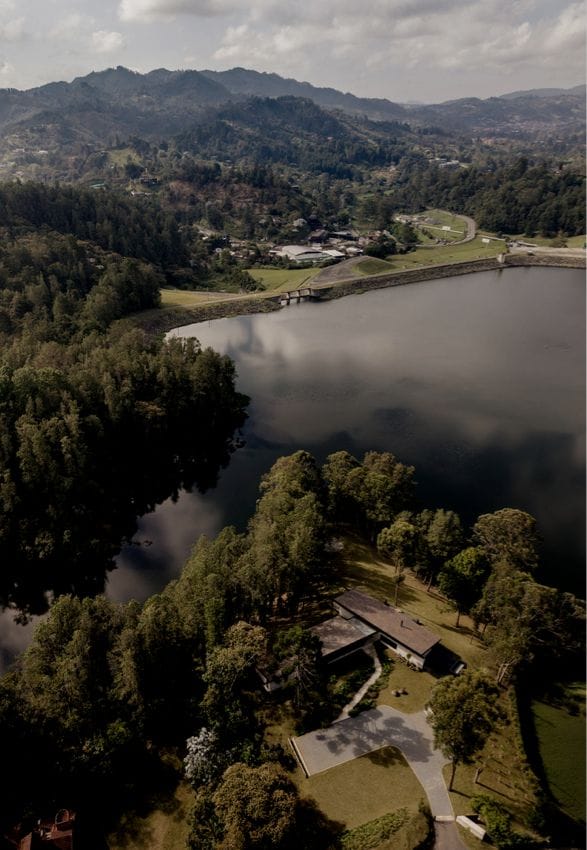
Built on a small peninsula within the La Fe reservoir, 30 kilometers east of Medellin, this house by Obranegra Arquitectos sits in a landscape where fog, intense sunlight, heavy rain, and cold nights can all happen in the same day. The architecture doesn't fight that variability. It was designed around it.
The approach sets the tone before you reach the front door. A winding path descends through dense vegetation of rosemary, lavender, pennisetum, vetiver, and ferns. The landscape strategy deliberately delays arrival, revealing the house progressively and turning the walk into a sensory transition from the upper access terrace down to the building below. By the time you see the house, you have already left the outside world behind.
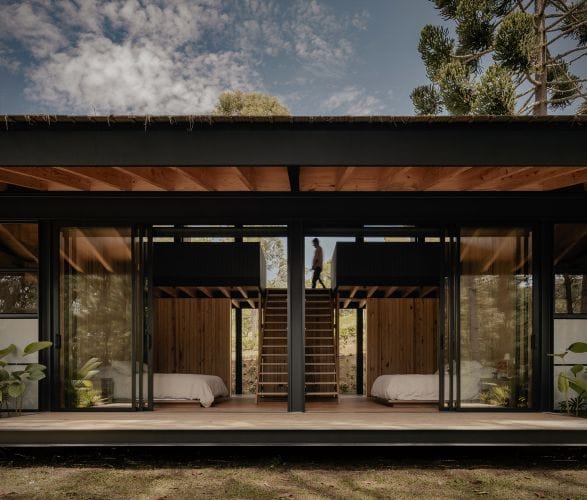
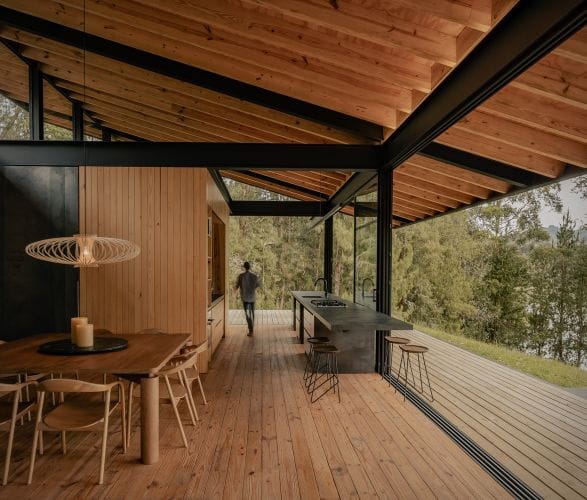
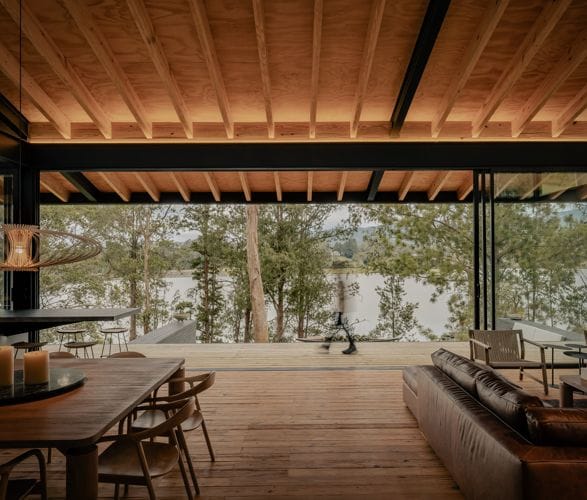
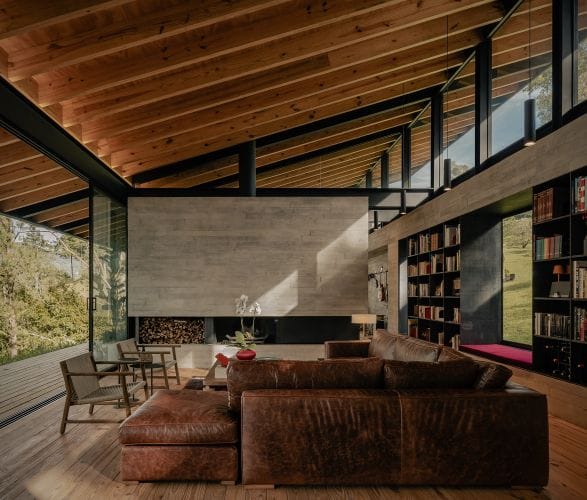
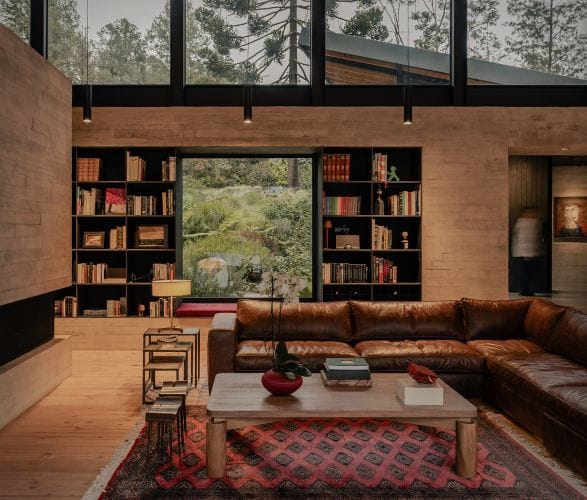
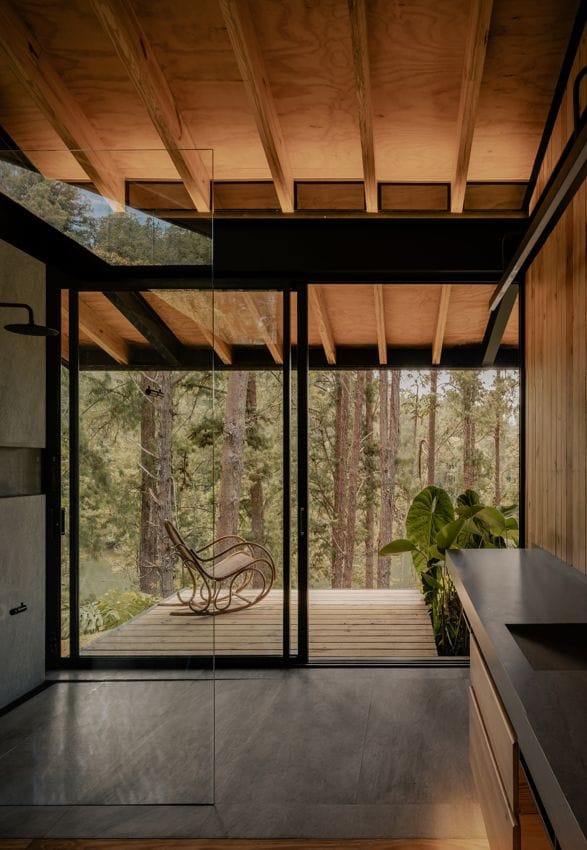
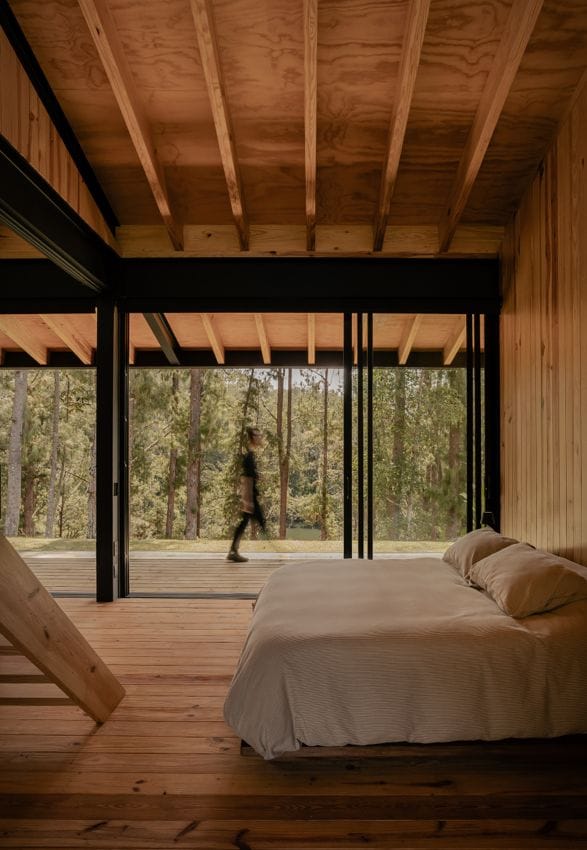
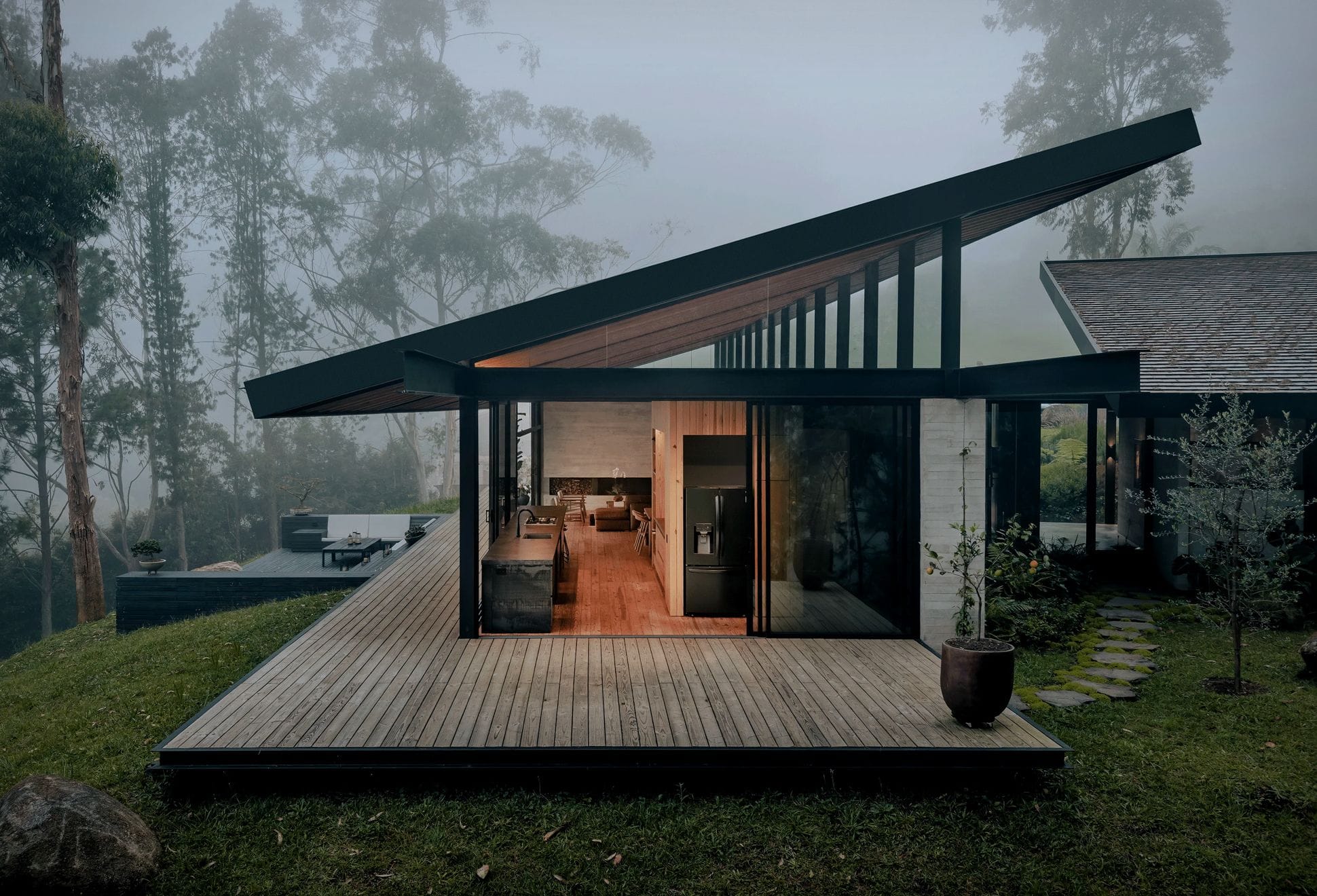
The plan is composed of two displaced volumes connected by a transitional space that serves as both threshold and circulation. The social volume is open, continuous, and transparent. Cooking, dining, reading, and music happen in a single flowing space with uninterrupted views across the reservoir. The sleeping volume is more compartmentalized, with two transparent facades. The corridor looks back toward the access garden while the bedrooms face the forest and the water's edge for a more intimate relationship with the immediate landscape.
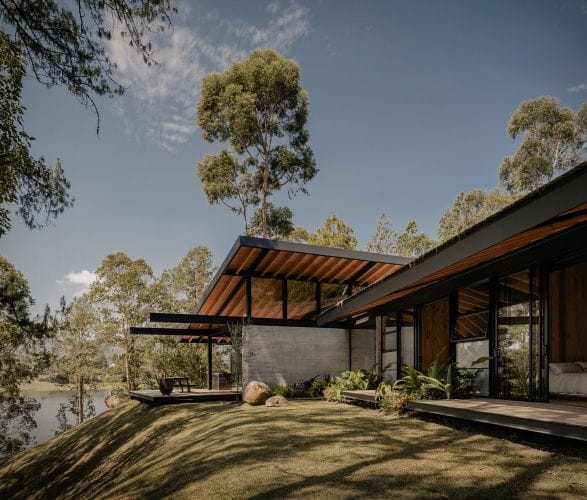
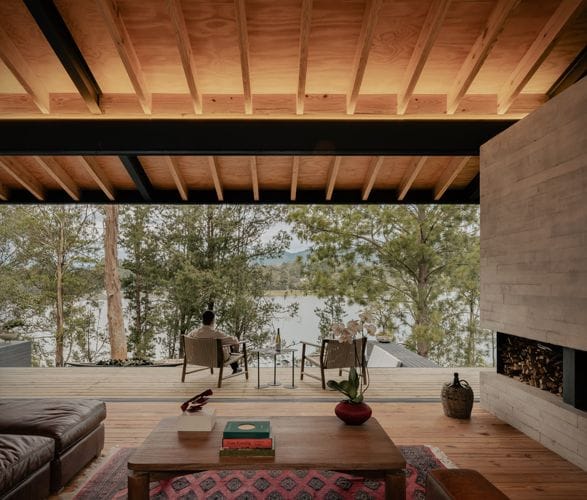
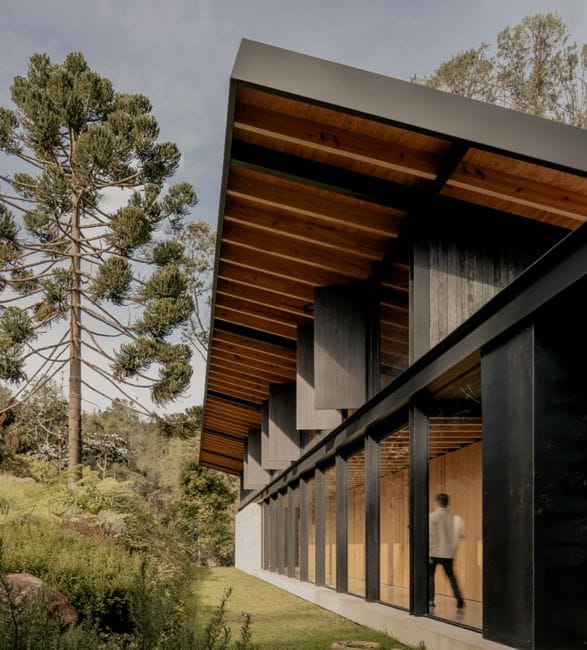
The roof is the defining architectural element. In both volumes, the slope follows the natural gradient of the terrain, directing rainwater toward the reservoir. Wide overhangs protect the interior from sun and rain while framing the surrounding mountains and forest. Beneath them, a series of terraces and corridors create transitional spaces between domestic life and the natural environment. The horizontal lines of the composition deliberately emphasize the verticality of the surrounding trees, allowing the architecture to sit within the forest rather than compete with it.
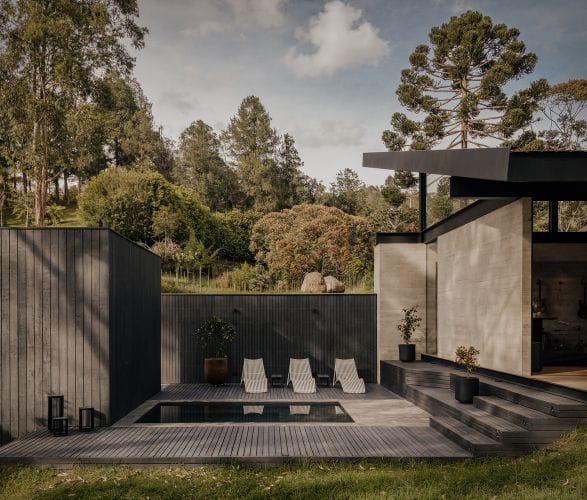
Materials are left honest. Exposed concrete, metal, and pine wood are used across the roof, floors, and walls. The combination maintains stable interior temperatures, improves acoustics, and creates a warmth that counterbalances the cool, variable climate outside. A band of pine, eucalyptus, and native myrtle trees along the peninsula edge provides natural protection from sun and wind.