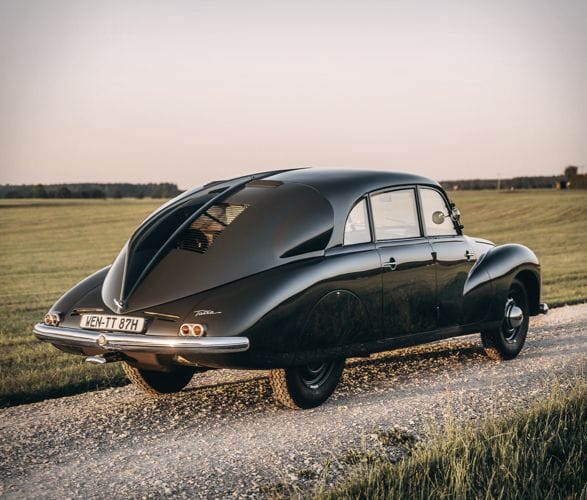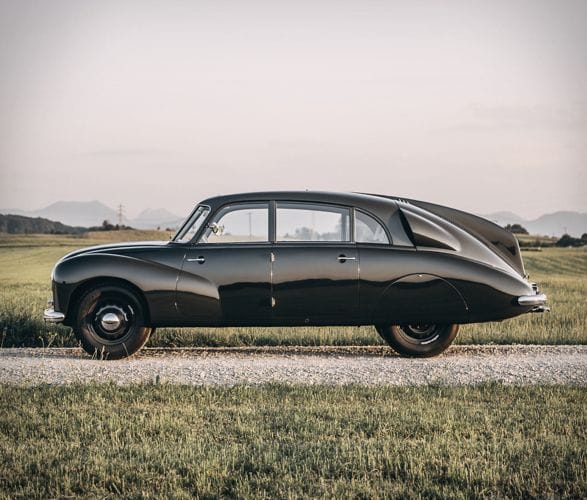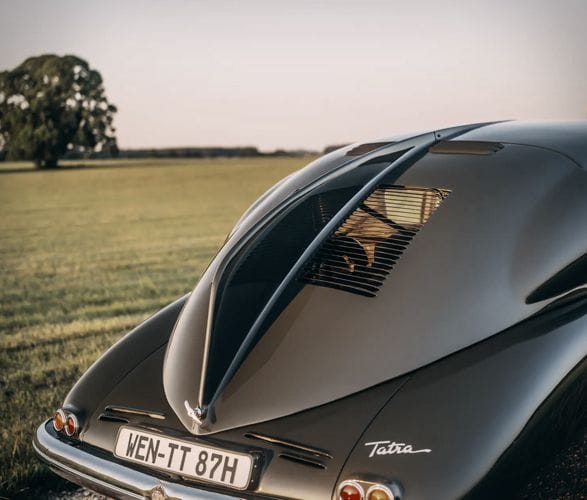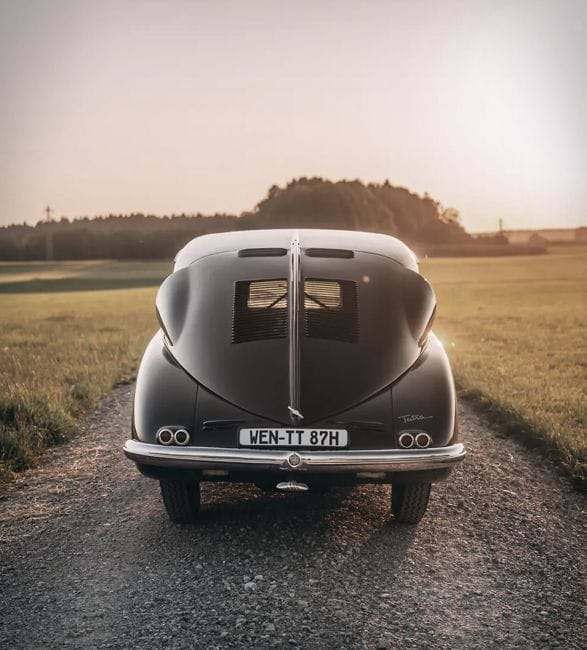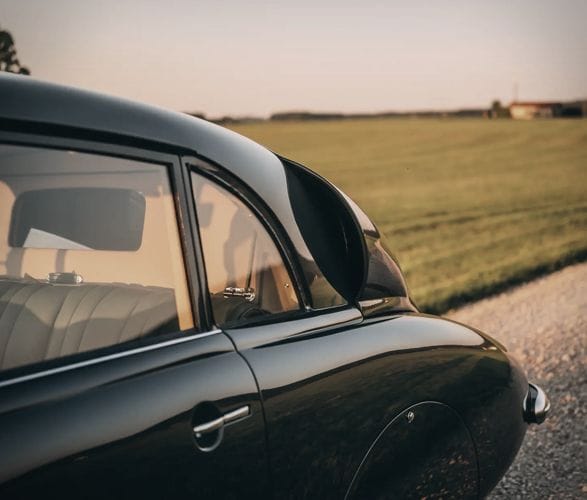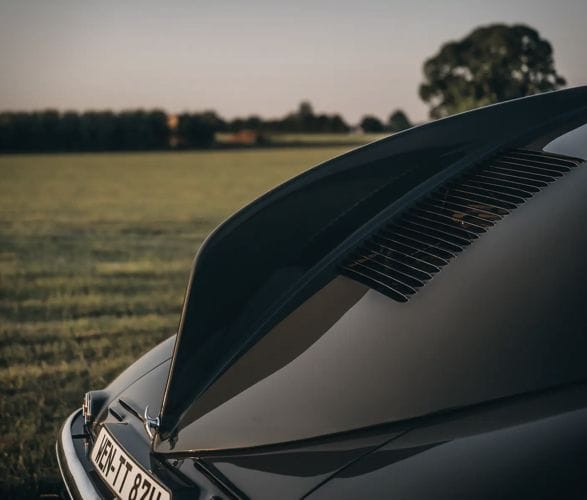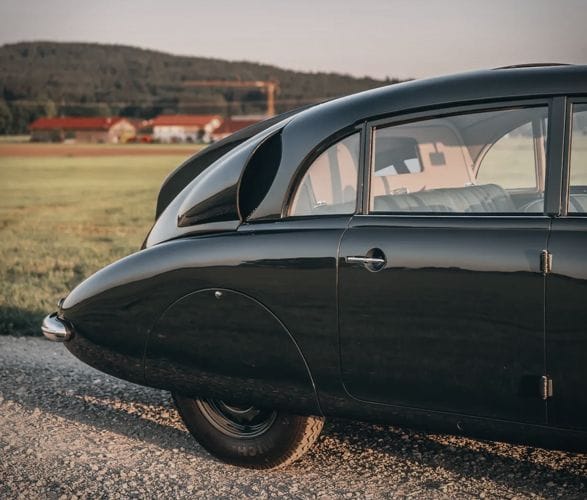


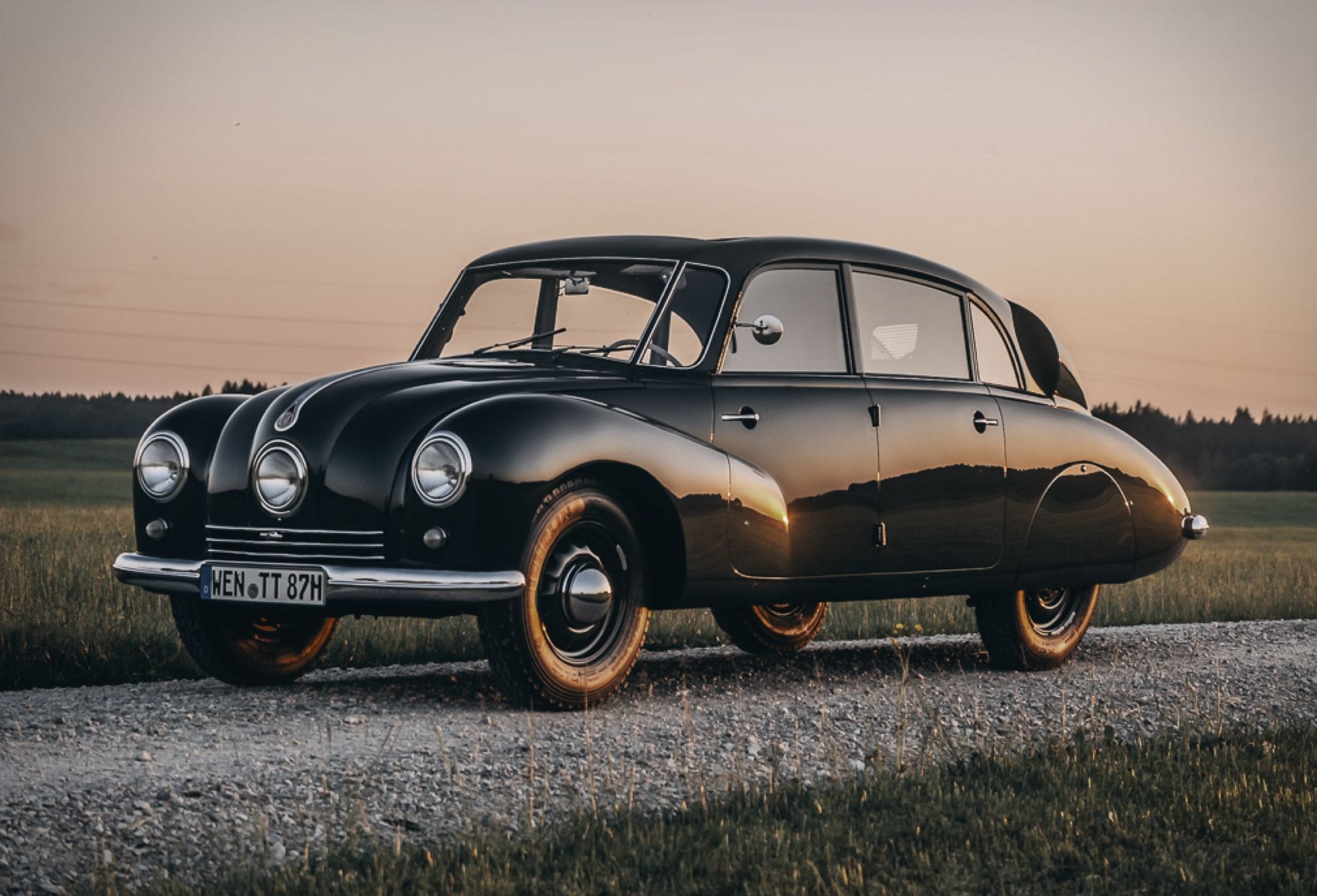
1950 Tatra T87 Aerodynamic Saloon Restored by ECORRA
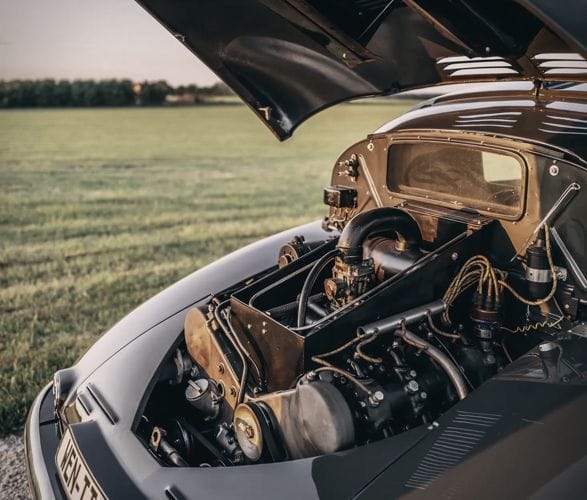
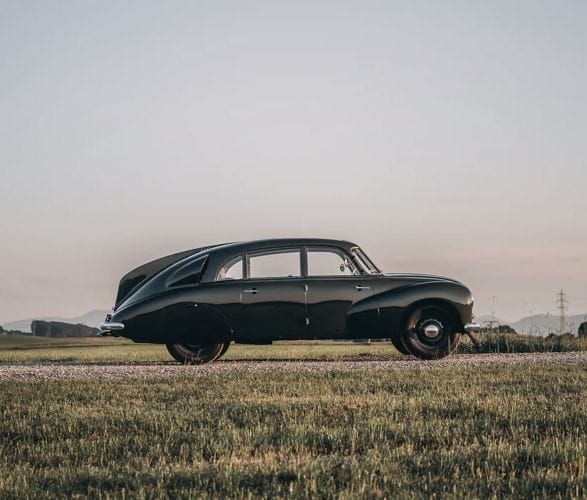
Before aerodynamics were a defining feature of car design, Tatra was already building the most technically sophisticated vehicles in the world. The T87 arrived in 1936 with a wind-cheating body, a rear mounted air cooled magnesium V8, a backbone chassis, fully independent suspension at all four corners, and a drag coefficient of 0.36. In 1936. Ferdinand Porsche's Volkswagen shared so many of its principles that Tatra sued and won. Only 3,056 were built across the entire production run. Fewer than 250 are believed to survive.
This particular example, chassis 79317, has a history that reads like a Cold War novel. In 1976 a 24 year old German enthusiast crossed the Iron Curtain into Czechoslovakia and tracked the car down to an owner in Frydek Mistek who was still using it as a winter daily driver. Buying it was straightforward. Getting it out was not. An export tax equal to the car's value, two years of negotiations, and repeated border rejections later, the T87 finally crossed the Iron Curtain in 1979 under its own power, driving the 1,000 kilometres back to Hannover.
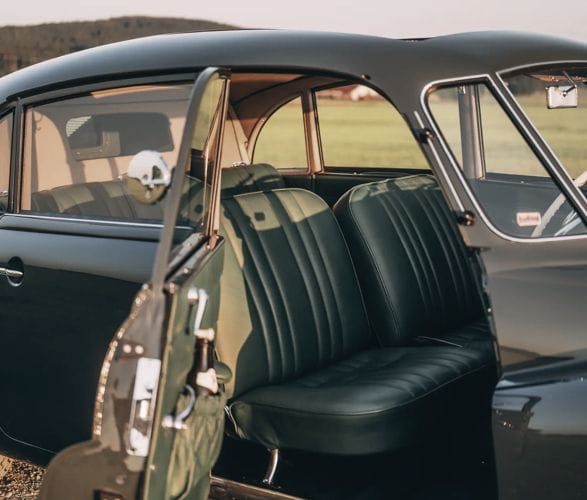
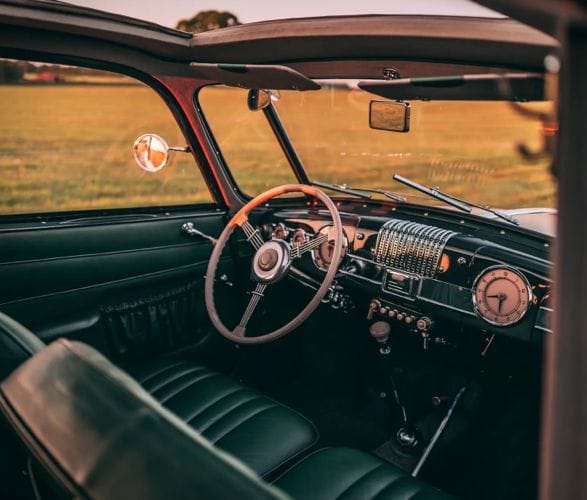
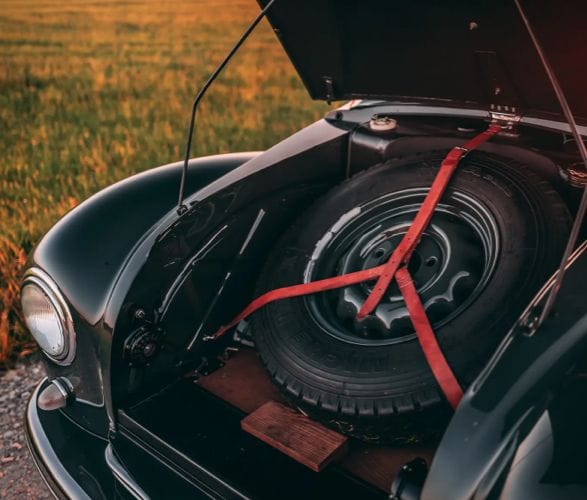
In 2001 the owner sent it home to the Czech Republic for a complete ground up restoration by ECORRA in Koprivnice, the world's foremost specialists in these machines. The original colour combination of dark green over green leather was confirmed through the Tatra factory museum. Custom leather was supplied by Aresma in Hamburg, period correct headlining and carpets sourced by the owner. Body, paint, and mechanicals were completely overhauled. Twenty three years after completion, the panel fitment and paint remain at a level that would embarrass many leading European restoration workshops.
The car passed to its second German owner in southern Bavaria in 2016 and has been carefully maintained and exercised since. It is now available through Schaltkulisse in Munich at an undisclosed price. Jay Leno, who owns one, has called the T87 the greatest car that nobody has ever heard of. That description is becoming harder to sustain as these machines increasingly command the attention their engineering always deserved.