


Floating Farmhouse
The Floating Farmhouse is a rare example of renovation done with restraint and confidence. Originally built in the 1820s in the Catskills, the historic farmhouse was reimagined by architectural designer Tom Givone as a deliberate study in contrasts, where early American craftsmanship meets modern glass, steel and concrete.
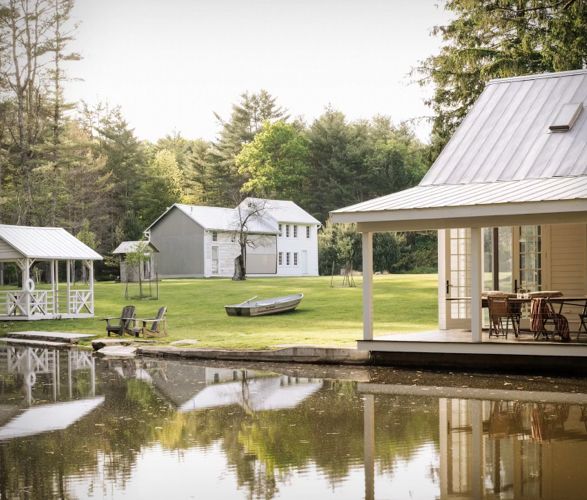
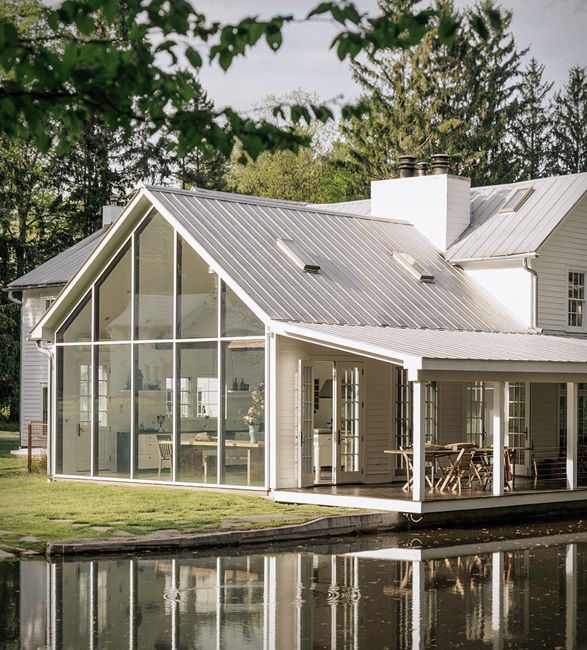
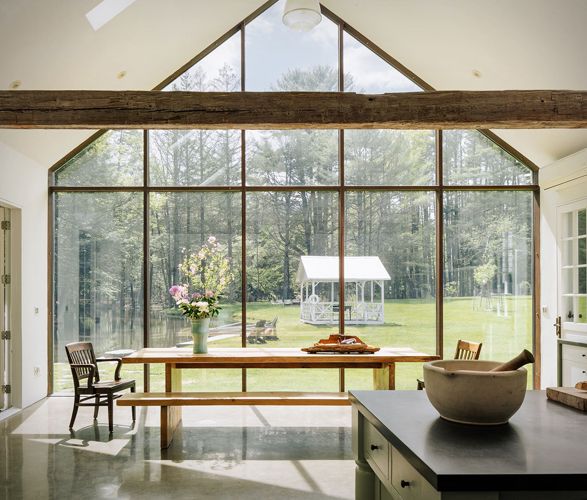
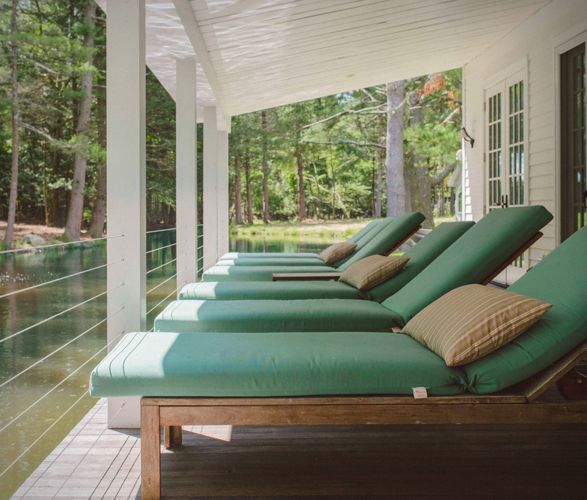
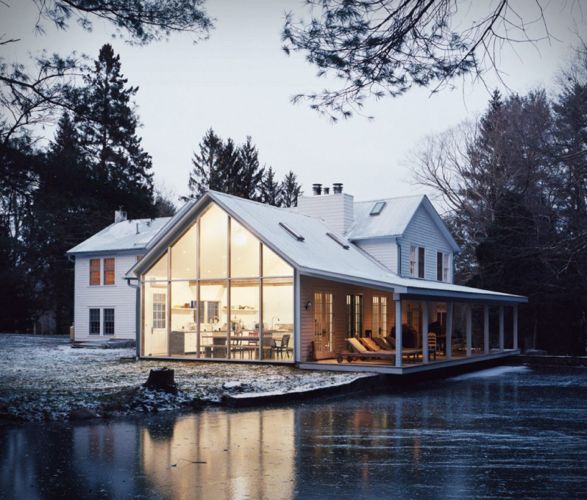
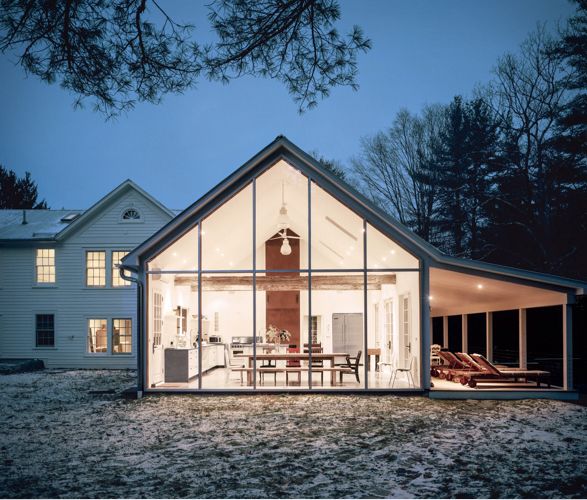
Set beside a waterfall that feeds into a quiet creek, the home already possessed a cinematic setting. Givone amplified this by introducing a dramatic cantilevered addition that extends over the water, creating the illusion that part of the house hovers above the river. A soaring glass gable wall frames the landscape like a living painting, while the original roof pitch is preserved to maintain continuity with the past.
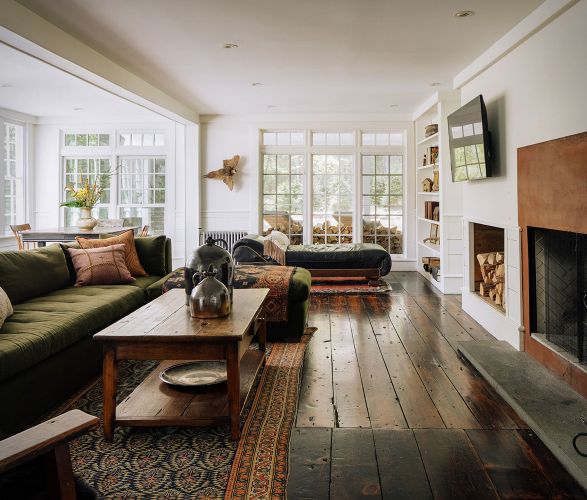
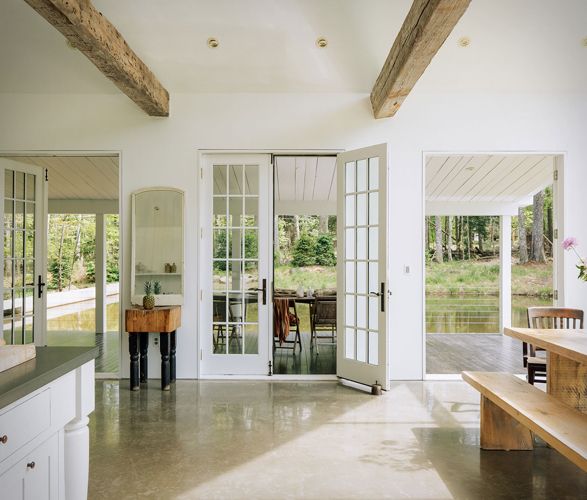
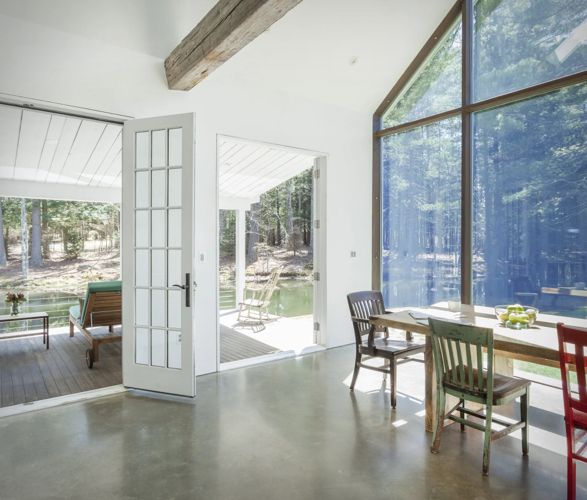
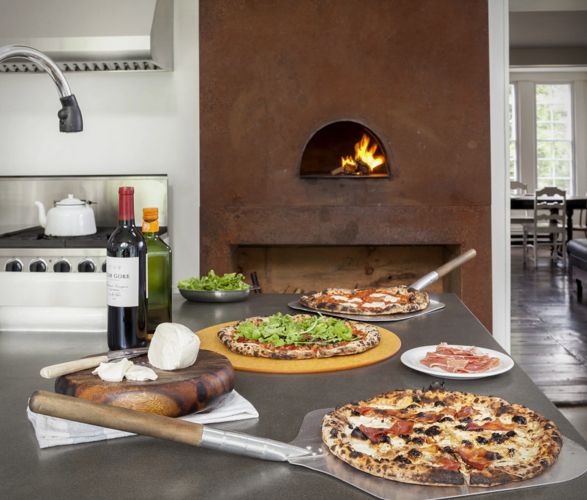
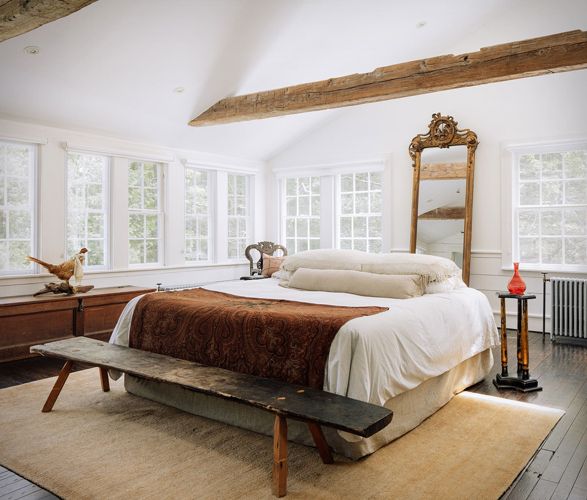
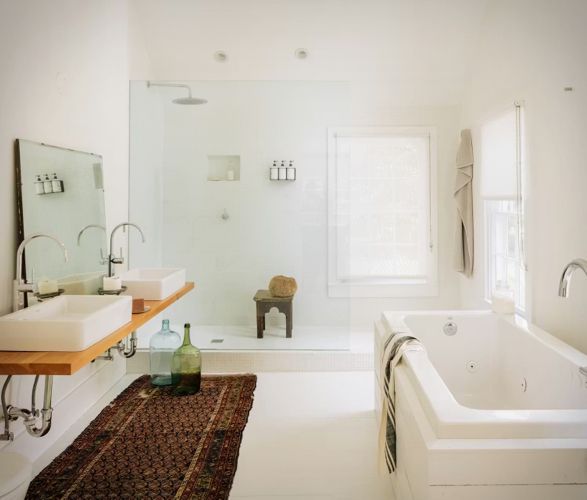
Inside, hand hewn timber beams and antique elements sit comfortably alongside polished concrete floors, steel columns and expansive glazing. An eighteenth century marble sink appears to float thanks to concealed supports, while a salvaged wood and zinc bathtub wrapped in stainless steel bridges centuries of design language. In the cathedral like kitchen, reclaimed dairy barn beams bring warmth to the contemporary structure, anchoring the space in history.
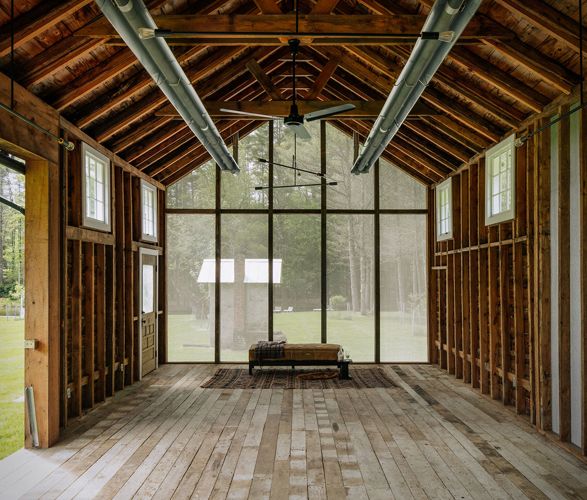
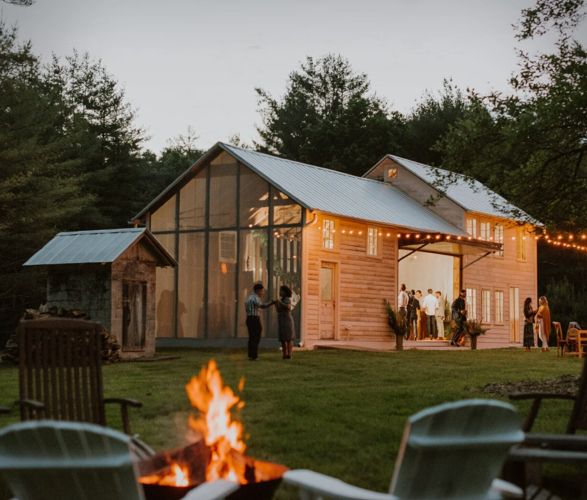
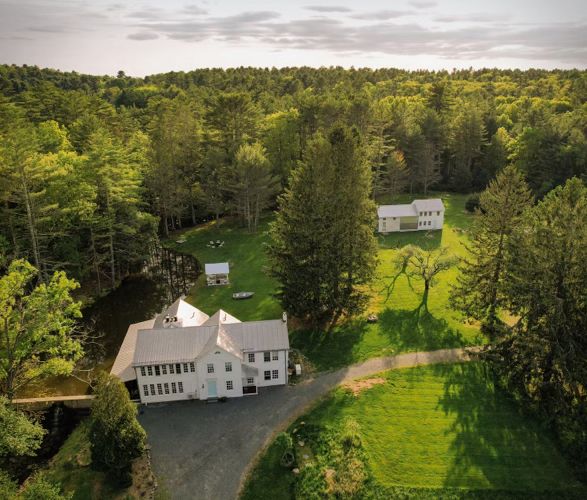
Beyond the main house, the property includes a reimagined barn clad in anodised aluminium panels, open orchards and a swimming creek, making it both retreat and architectural statement. The Floating Farmhouse does not try to freeze time. Instead, it layers eras thoughtfully, showing how heritage and innovation can coexist without one overpowering the other.
Set beside a waterfall that feeds into a quiet creek, the home already possessed a cinematic setting. Givone amplified this by introducing a dramatic cantilevered addition that extends over the water, creating the illusion that part of the house hovers above the river. A soaring glass gable wall frames the landscape like a living painting, while the original roof pitch is preserved to maintain continuity with the past.
Inside, hand hewn timber beams and antique elements sit comfortably alongside polished concrete floors, steel columns and expansive glazing. An eighteenth century marble sink appears to float thanks to concealed supports, while a salvaged wood and zinc bathtub wrapped in stainless steel bridges centuries of design language. In the cathedral like kitchen, reclaimed dairy barn beams bring warmth to the contemporary structure, anchoring the space in history.
Beyond the main house, the property includes a reimagined barn clad in anodised aluminium panels, open orchards and a swimming creek, making it both retreat and architectural statement. The Floating Farmhouse does not try to freeze time. Instead, it layers eras thoughtfully, showing how heritage and innovation can coexist without one overpowering the other.